Modern lifestyle tends to make our bodies suffer under constant stress and anxiety, resulting in fatigue and various health complications, such as chronic pain, sleep disturbances, and others. As conventional medicine fails to offer the desired solution in some cases, people usually resort to alternative ways of restoring health and balance within one’s body.
Among other treatments, such as yoga, meditation, and reflexology, two approaches to treating different diseases deserve a special mention. These include acupressure and acupuncture. Both methods are rooted in the principles of TCM; both require working with specific points.
However, these practices vary significantly when compared to each other. Read on to explore how these sister therapies compare, what science says about their effectiveness, and how to choose the ideal practice for your unique health goals.
What is Acupuncture?
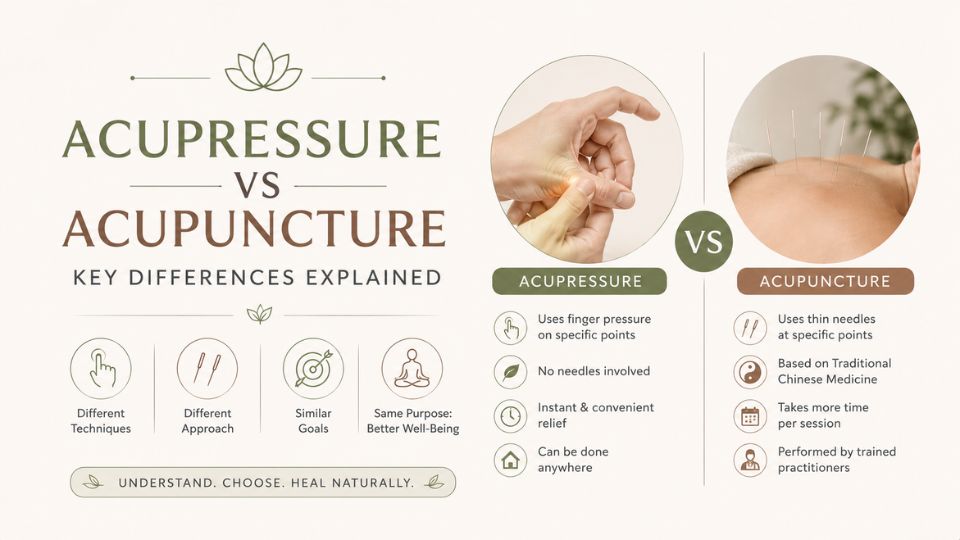
Acupuncture is a sophisticated procedure involving the use of ultra-fine needles inserted into particular points of the body, namely meridians. For those scared of injections, acupuncture might seem particularly intimidating, although the reality is completely different. Also, acupuncture needles do not resemble thick needles used for blood withdrawal.
Being thin, flexible, and sterile, they tend to produce a minimum impact on patients’ skin. When the needle is inserted by a qualified acupuncturist, the sensation ranges from a small pinprick to numbness, warmness, and tingling. It is considered to be a sign of successful engagement of the patient’s nervous system.
What is Acupressure?
Acupressure is an alternative method to traditional acupuncture that does not involve any needles or injections. Instead, this treatment relies on the application of physical pressure to particular parts of the body.
During acupressure therapy, a skilled acupressurist uses their thumbs, fingertips, palms, elbows, as well as certain tools designed specifically for this treatment, such as mats, rollers, or sticks. The sensations produced during such therapy resemble deep massage or the sensation of localized pressure.
Being a less invasive procedure, acupressure stimulates the body only to a certain extent because of its focus on the superficial tissues. Thanks to the application of physical pressure, this method manages to release muscles, improve blood circulation, and enhance the process of oxygenation.
Comparison Between Acupressure vs Acupuncture
To help you visualize how these two therapies differ in practice, let’s look at a straightforward breakdown of their key technical and practical characteristics:
| Characteristic | Acupuncture | Acupressure |
| Primary Tool | Ultra-slim, sterile metallic needles | Fingers, thumbs, elbows, or mats |
| Invasiveness | Minimally invasive (penetrates skin) | Non-invasive (surface contact) |
| Common Sensations | Mild tingling, dull ache, heavy warmth | Firm pressure, deep massage sensation |
| Depth of Reach | Deep tissue layers and nerve clusters | Superficial muscle and tissue layers |
| Application | Must be performed by a licensed professional | Can be self-administered or professionally applied |
| Primary Use Cases | Chronic pain, fertility, complex internal health issues | Stress relief, muscle tension, mild acute discomfort |
| Setting | Clinical, private practice, or wellness center | Home, spa, or clinical massage environment |
Key Differences Between Acupuncture & Acupressure Explained
To make sure you are selecting the right healing path according to your personal health goals, it may be helpful to identify the differences in the structures of the two techniques in terms of their impact on the human body.
The Difference in Physical Tissue Manipulation
The first difference that sets the techniques apart is the level of tissue manipulation. Unlike acupressure where no needling happens, acupuncture uses tiny needles that glide through superficial tissues to reach deeper muscles and nerves. Therefore, the effect created through this process tends to be more powerful and impactful. Acupressure utilizes external pressure to treat the tissue, which makes this technique softer but incredibly effective at relieving muscle stiffness.
Localized and Global Healing
As we know, acupressure is inherently aimed at achieving localized effects. If you experience some kind of pain in your legs or shoulders, applying acupressure to the affected areas will help you relieve the tension and relax. Acupuncture is also a great solution for local healing but focuses more on creating a general system-resetting effect. By treating deeper blockages in the meridian system, it addresses many health-related problems such as hormonal disorders, irregular sleep, and neuropathy.
Professional Approach vs. Self-Care Tool
Acupuncture demands special education and knowledge since placing the needle in wrong place may be very risky. Only after completing years-long training and obtaining the necessary qualifications can professionals practice their skills on their clients. With acupressure, everything is much simpler because you get full control of the procedure once taught how to locate your pressure points by a trained professional.
Surprising Similarities You Might Not Know
In spite of their different techniques of usage, acupuncture and acupressure are closely interconnected approaches that share some essential similarities and complement each other well throughout the whole healing process. These similarities are as follows:
- One Unified Approach To Diagnosing Human Anatomy: Regardless of whether you choose acupuncture or acupressure, the point of treatment remains the same – the same meridians will be activated through the manipulation of Qi. The only difference lies in how it will be done: via pressure for acupressure and with needles for acupuncture.
- An Equal List Of Advantages: Both techniques are known to alleviate pain, decrease stress levels, mitigate the feeling of nausea, reduce the amount of migraines and improve blood circulation. Also, both treatments are equally successful at regulating the balance of the body’s nervous systems – they can calm your sympathetic nervous system down and engage the parasympathetic one.
- An Undying Commitment To Holism: Both modalities focus on analyzing the patient’s entire physical, psychological and emotional state to get a clear understanding of the root cause of their condition rather than addressing the symptom itself.
- Excellent Complementary Treatment For Other Forms Of Medicine: Being recognized as complementary treatments of proven quality, acupuncture and acupressure are often combined with physical therapy, osteopathy, and other forms of medicine to speed up the healing process.
Safe Practices: Who Should Exercise Caution?
Both practices are very safe and associated with little to no side effects, however, there are some health conditions under which these modalities need to be exercised with particular caution.
In Case Of Acupuncture:
- Any Bleeding Disorders: Individuals with hemophilia and other bleeding disorders as well as those who take drugs that thin blood should not go through this practice as it puts them at high risks of bruising.
- Implanted Pacemaker: Those who have a heart pacemaker shouldn’t undergo electro-acupuncture because the currents passing through the needles may disrupt its normal work.
- Open Wounds: Acupuncture is contraindicated in cases where the treatment area is inflamed and/or contains an open wound or infection.
In Case Of Acupressure:
- Recently Sustained Injuries: Pressure exerted by fingers can aggravate any fracture, severe bruise, skin infection or even deep vein thrombosis.
- Pregnancy: Women in the first trimester of pregnancy must consult a doctor before undergoing either of these treatments, since some acupoints are believed to trigger uterine contractions, potentially leading to premature labor.
Final Thoughts!
Acupuncture is recommended for treating chronic pain and internal issues, whereas acupressure is perfect for stress-related problems. Some people benefit from using both approaches to keep themselves healthy and in harmony all the time. For personalized guidance and holistic healing support, connecting with experienced wellness expert Babita Chaudhary can help you achieve a healthier, more balanced lifestyle.