
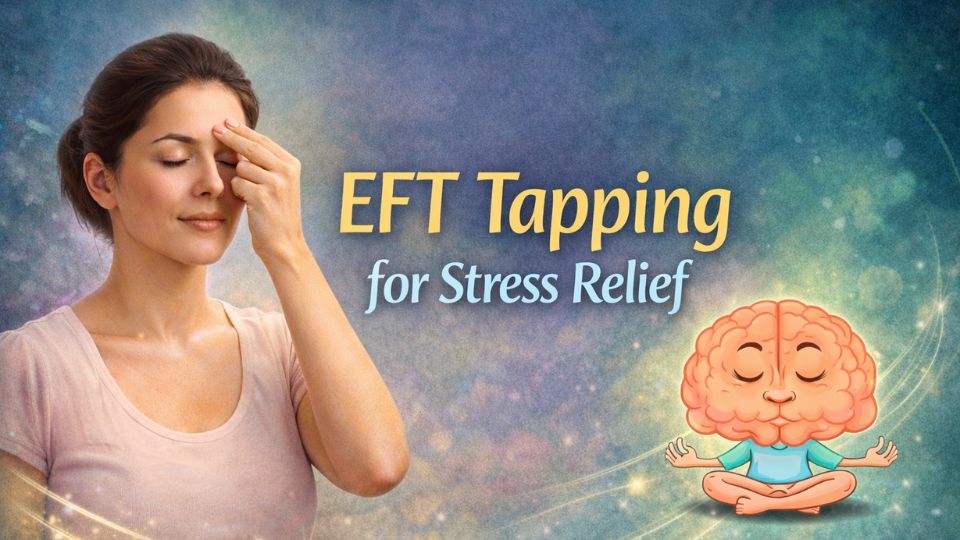
Ever experienced a lingering physical sensation after resolving an emotionally challenging situation? Did you catch yourself grinding your teeth in the middle of a meeting, taking shallow breaths while behind the wheel of your car, or experiencing the presence of a “pit” in your stomach for seemingly no reason?
If so, your body might be holding onto some unresolved stress, regardless of whether you have been dealing with chronic illnesses or daily life. Think of your body as a locker room for your feelings. One effective and popular tool used to resolve such an issue is a powerful technique known as EFT Tapping.
It is an easy-to-do technique that allows a person to tap on specific energy points on their body and say particular things about their worries. Despite looking a bit unrealistic, tapping is a great tool that will help you get rid of stress quickly and easily. Learn more about the benefits of this technique!
What Is EFT Tapping? Getting to Know the Technique
EFT Tapping combines the latest discoveries of psychology with traditional beliefs from Chinese medicine. With this technique, you use specific pressure points on the face and upper body to relieve thoughts, worries, and emotions.
Gary Craig was the one who introduced this technique in the 1990s. According to his theory, bad memories or emotions lead to a disturbance in the natural energy flow of the body. With EFT, a person literally resets the system by applying pressure to these points.
What makes this technique unique:
- You don’t need any equipment.
- You can do it yourself – wherever you are.
- It affects both your mind and your body at the same time.
How EFT Tapping Works: The Science Behind This Technique
Until recently, tapping was considered pseudoscience, and nobody really believed that tapping could change anything. Today, research proves how EFT influences our physical reaction to stress:
1. Reduction in Stress Hormones
Studies prove that EFT significantly lowers cortisol production. Participants who underwent tapping sessions demonstrated a reduction in cortisol up to 43% compared to those who just sat and talked about their issues.
2. Reduction in Brain Reactivity
As soon as you become stressed or afraid, a part of your brain that controls fear reactions becomes extremely active. Tapping signals to the brain that the situation does not require fear anymore, making your brain shut down the “alarm.”
3. Calm Down Your Body
When you tap and breathe deeply, your vagus nerve gets activated. As a result, you come out of fight-or-flight mode into rest-and-repair mode.
How to Overcome PTSD and Trauma Using EFT
Living with PTSD or trauma is exhausting. Negative memories, constantly being on alert, and unexpected panic attacks may happen to you out of nowhere due to your body’s response. To overcome trauma, one should learn how to use tapping in this case:
- The Movie Technique: Picture the situation as a movie scene and give it a name. Once you come across a scene that causes pain, stop and apply EFT techniques to make yourself calm.
- Take Small Chunks: Do not tackle everything at once. Focus on smaller elements of the situation, the look on someone’s face, some sounds you remember, etc.
- Pay Attention to Your Body Feelings: Do you have a knot in your stomach or weight in your shoulders? Then tap for that particular feeling first.
Note: In case of severe trauma or PTSD, it might be wise to seek professional advice to avoid negative outcomes.
How to Start: Step-by-Step EFT Tapping Protocol
If you need something quick that will make a difference right away, this is a perfect solution for you. This is a short, simple and highly effective exercise which can literally shift how you feel in minutes!
Step 1: Define the Specific Problem
The first thing you need to do before starting EFT Tapping is deciding on what exactly you’d like to address today. The secret of the tapping technique lies in specificity, so instead of using a general phrase such as “I’m stressed,” try focusing more precisely. For example, choose the problem such as: “I’m scared of my 3PM meeting with the boss” or “There is an uncomfortable pressure in my chest as I consider my bills.”
Step 2: Find Out How Intense is the Feeling/Physical Sensation
Before you move onto tapping, assess your current state. On the scale of 0 to 10 (where 0 stands for total peace, and 10 – for the worst sensation/experience you’ve ever felt), what would you rate your feelings right now? Write down this number or keep it in your head, it will help you later determine whether tapping has worked for you.
Step 3: Setup Statement
For starting EFT Tapping, it is necessary to locate a Karate chop point on your non-dominant hand – the place where it starts. Then, you need to tap with your dominant hand fingers 7 times on this point while repeating aloud the following “setup statement”:
“Even though I feel [worry/pain/pressure/physical sensation/any specific word which describes what is going on right now] at the moment, I deeply accept myself.”
Step 4: Do One Round of Tapping
Having done the “setup phase,” start tapping all nine points of your body (including Karate chop). Tap approximately 5-7 times with two fingers on each point while saying aloud your “reminder phrase” – that particular thing you want to concentrate on (see below for more info).
Step 5: Breathe Deeply and Assess Results
When you finished one round of tapping, breathe deeply once again. Now assess how you feel compared to before. Has the intensity decreased or even gone off? If yes, great job! But if it is still there, you need to continue tapping until the results become obvious.
Final Thoughts
As mentioned above, EFT Tapping is a powerful method which proves to us all that we indeed have the power to influence our emotional and physical states on demand. And the best part is that we don’t need any additional equipment for this: we need to use our own hands and talk to ourselves openly and truthfully. After all, the process helps us teach our bodies that everything is fine now, and they can finally release the energy.
Book a session with Babita Chaudhary and learn more about emotional freedom technique!