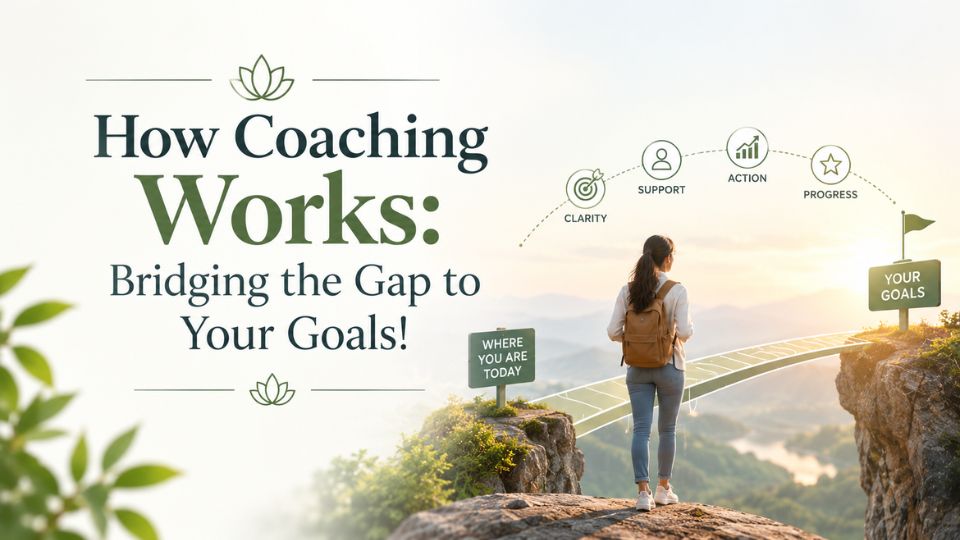
Ever felt like you knew exactly what you had to do, yet could never make yourself do it? You knew your goal, knew your strengths, and even had a plan. However, nothing seems to be moving fast enough. This is where coaching can really make a difference.
Life Coaching helps close the gap between knowing and doing. It creates an organized environment where you will be able to understand your priorities, overcome any limiting beliefs, increase your self-awareness, and turn your intentions into actions. Unlike just telling you what needs to be done, good coaching helps you find out what works for you.
Whether it is career, leadership, self-confidence, relationships, productivity, or personal development that your goal is about, the process starts with understanding where you are and where you want to be. Learn more to understand how coaching works, why it supports lasting change, and how it can help you move closer to your goals.
Why is Life Coaching Crucial?
Life can become quite complicated when different goals, duties, and expectations are conflicting. Life coaching gives you direction, clarity, and structure needed for transformation. The following are five ways life coaching can be useful for both personal and professional development:
- Creates Clarity About Personal Goals: Life coaching allows individuals to gain a better understanding of their priorities, values, strengths, and aspirations. It helps transform fuzzy wishes into meaningful and achievable goals.
- Turns Intentions Into Actions: Knowing what to do doesn’t mean doing it. Professional coaching transforms big goals into actionable steps and makes achieving them easier and measurable.
- Increases Self-Awareness and Confidence: Coaching helps an individual become more aware of their habits, decision-making processes, strengths, and limiting beliefs, which in turn can increase one’s confidence and motivate them to take action.
- Offers Accountability and Consistency: Initial motivation often fades away after some time. Coaching makes individuals accountable for their progress through regular reviews, which keeps people focused and consistent in pursuing their goals.
- Helps Overcome Obstacles in One’s Personal and Professional Life: Fears, self-doubt, procrastination, and uncertainty can slow down progress. Life coaching helps to discover such obstacles and develop strategies for moving forward confidently.
How Does Life Coaching Work Step-by-Step?
Understanding how coaching works becomes simpler when the whole process is considered as a set of stages that are interconnected with each other. Let’s see how the process works:
Step 1: Understanding the Current State
Usually, the process of coaching starts with finding out the current state of affairs for the individual. The discussion may cover their personal and professional circumstances, priorities, strengths, irritations, and aspirations. This step lays the groundwork for successful coaching and shows the gap between the current state and the desired one.
Step 2: Setting Meaningful Goals
The next step is focused on goal-setting. Goals must be clear enough to help with taking action. A coach helps the individual identify what is most important for them and why it matters. Meaningful goals are those which are aligned with personal values rather than with someone else’s expectations.
A coach helps to determine:
- What an individual wants to achieve
- Why it is important
- What success will look like
Step 3: Examining Barriers
As goals become identified, focus shifts to possible obstacles. The obstacles may include fears of failure, lack of confidence, procrastination, undefined priorities, beliefs limiting one’s efforts, and practical issues.
It becomes possible to examine these barriers and work around them. Rather than viewing any delays in goal achievement as a personal weakness, coaching considers what is really standing in one’s way.
Step 4: Making an Action Plan
Goals gain meaning when they result in actions. Hence, coaching aims to break down large goals into actions. The action plan might include certain behaviors, deadlines, priorities, and measurable results.
A bigger goal can be easily divided into smaller actions. It will also be possible to modify the action plan depending on emerging realities.
Step 5: Taking Action
The individual then begins applying the plan in real life. This is where coaching moves beyond discussion and focuses on behavioural change.
Real experiences may reveal new challenges or unexpected opportunities. Coaching helps individuals reflect on these experiences and adjust their approach when necessary.
Step 6: Reviewing Progress
During the coaching sessions, the progress is constantly evaluated. An individual identifies the things that have been done well, less well, and need improvement.
This review process helps to stay focused and recognize the achieved successes along the way. It builds an iterative cycle which facilitates better decision-making and behavior.
Step 7: Achieving Self-Sufficiency
Coaching should not result in dependence on a coach in the long run. The ultimate aim of coaching is to foster the skills of self-awareness, confidence, decision-making, and goal-oriented strategies.
With time, an individual gains the abilities to:
- Make independent, confident decisions
- Deal with different challenges in an aware manner
- Continue achieving the set goals with fewer and fewer interventions
Hence, coaching can be a powerful means of sustainable personal and professional growth.
Conclusion
Knowing how coaching works explains the value of coaching as a tool for personal, career, and long-term development. Coaching helps to clarify one’s goals, see one’s barriers, boost confidence, and take actionable steps.
Life coaching is ultimately about bridging the space between intention and action. For individuals seeking meaningful transformation, Babita Chaudhary can provide valuable coaching support to help turn goals into focused action and sustainable progress. With the right guidance, self-awareness, and commitment, personal and professional aspirations can become a clearer and more achievable path forward.