Have you ever had a bad day where something felt “off” but could not pinpoint exactly what it was? Maybe you suddenly have a nagging tightness in your lower back, you are experiencing unprovoked anxiety, or you’ve hit a wall regarding creative inspiration. The reality is that there is much more going on than you can see on the surface, and your body’s energy centers may be unbalanced.
These energy centers, known as chakras, have been practiced since the ancient times of Hinduism. Essentially, chakras serve as the major energy centers of the body. These act like maps and show what areas in your body are blocked and what areas are not receiving sufficient prana (energy). Read on to learn more about the 7 major chakras, including their symbolism, attributes, effects, and methods of balancing.
What Are Chakras and How Do They Work?
The meaning of the word “Chakra” stems from Sanskrit and translates to “wheel“. The chakras, or spinning wheels of energy, were discovered in yoga and Ayurvedic traditions. Chakras lie within the astral body, which refers to the subtle energy field surrounding our physical bodies. This means that although chakras cannot be viewed using modern-day radiography technology, their effects can certainly be felt.
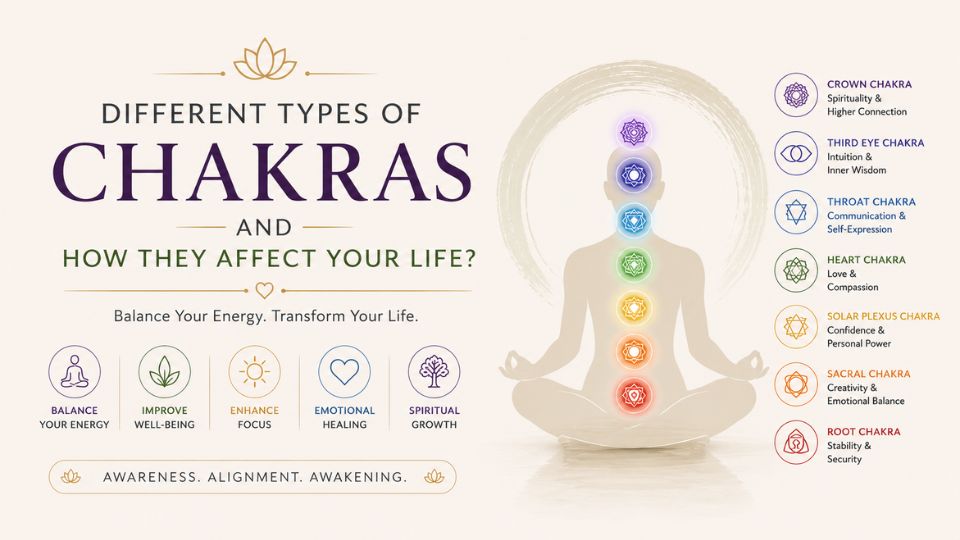
There are 7 primary chakras in the human body, starting from the base of the spine and stretching to the crown of the head. Not only does each major chakra connect to particular nerve bundles and important organs, but it also rules the specific aspects of human existence. Chakras are responsible for regulating our physical, emotional, and even spiritual dimensions.
The Power of Prana
Chakras act like distribution centers for energy within the body. Specifically, each center serves as an outlet for particular organs within the body. For example, your throat chakra distributes energy for communication and thyroid functions, while the root chakra distributes energy for the legs and kidneys.
However, when a chakra becomes blocked or imbalanced, prana stops flowing, and physical ailments occur. You might feel persistent low-energy, tension, and emotions such as irritability or grief, which seem unresponsive to regular talk therapies.
A Detailed Guide to the 7 Chakras
To better understand how energy flows through the body, it’s important to explore the seven main chakras, each influencing different aspects of your physical, emotional, and spiritual well-being.
1. Muladhara Chakra (The Root Chakra)
- Located: At the base of the spine, between the anus and the genitals
- Color: Red
- Element: Earth
- Symbol: A 4-petaled lotus with a downward-pointing triangle.
The Root Chakra rules over all matters related to survival, stability, and “rooting“. When this chakra is open and in balance, you feel secure and grounded. You know that your basic needs are met and therefore have enough strength to take care of others.
- Signs of Imbalance: When your Root chakra is blocked, you may feel unsafe and anxious all the time. Other indications of problems with the Root Chakra include physical problems in lower back, fatigue, and digestive issues.
- Ways to Balance: Reciting the seed mantra “Lam“. Practicing grounding yoga positions, such as Tadasana or Vrikshasana. Walking barefoot on the ground and enjoying mother nature.
2. Svadhishthana Chakra (The Sacral Chakra)
- Located: In the lower abdomen, about four fingers below the navel
- Color: Orange
- Element: Water
- Symbol: A crescent moon inside a circle, surrounded by 6 petals.
The Sacral chakra is all about creativity, sex drive, and emotional intelligence. This is the place within the body where the sense of flow is created and regulated.
- Signs of Imbalance: Blockages within this energy center often cause difficulties with creativity and reproduction. People with a blocked Sacral Chakra often feel like something is holding them back from fully enjoying their lives.
- Ways to Balance: Recite the seed mantra “Vam“. Engage in any water-based activity, such as swimming or soaking in a hot bath. Try practicing yoga poses that open the hips, like Baddha Konasana or Trikonasana.
3. Manipura Chakra (The Solar Plexus Chakra)
- Located: Between your navel and bottom part of your ribs cage
- Color: Yellow
- Element: Fire
- Symbol: Downward-pointing triangle in a lotus flower with ten petals
Manipura Chakra is your “power center“. The source of your self-esteem, will, determination, “gut feeling“.
- Signs of Imbalance: You’ll lack self-confidence and won’t be able to make decisions. If hyper-active, you will become too aggressive or perfectivist. Physical symptoms may include stomach ulcers, diabetes or problems with digestion.
- Ways to Balance: Good physical practices for working with manipura chakra include core strengthening exercises and yoga poses like boat pose (navasana) or cobra pose (bhujangasana).
4. Anahata Chakra (The Heart Chakra)
- Located: In the middle of your chest
- Color: Green
- Element: Air
- Symbol: Two intersected triangles creating a star inside a lotus flower with 12 petals
Anahata Chakra serves as a link between the lower chakras, focused on earthly things, and the upper chakras, focused on spiritual matters. Its main energy is love.
- Signs of Imbalance: You’ll feel loneliness, envy or lack of ability to forgive. May be linked to high blood pressure or respiratory problems physically.
- Ways to Balance: The best way to activate heart chakra would be heart opening yoga poses like camel pose (ustrasana), fish pose (matsyasana). Breathing practices such as Pranayama (deep breathing techniques) are also highly effective here.
5. Vishuddha Chakra (The Throat Chakra)
- Located: At the base of your neck
- Color: Blue
- Element: Ether/Space
- Symbol: Lotus flower with 16 petals surrounding circle inside a triangle
Vishuddha Chakra focuses on communication and expression. It’s not only your ability to speak, but also to listen and express yourself honestly.
- Signs of Imbalance: A blocked throat chakra may lead to a lump in your throat feeling shyness or the opposite i.e inability to listen to others.
- Ways to Balance: Practices which involve chanting, singing or shoulder stand (sarvangasana) are beneficial.
6. Ajna Chakra (The Third Eye Chakra)
- Located: Between eyebrows
- Color: Indigo
- Element: None (beyond physical elements)
- Symbol: Circle surrounded by two petals of the lotus flower inside upside down triangle
Ajna Chakra is a center of intuition and wisdom and gives us an ability to imagine. Letting our third eye open we can see the whole picture and rely on our inner knowledge and wisdom.
- Signs of Imbalance: When this chakra is blocked you may have a cynical attitude towards people, feel too logical or often have headaches.
- Ways to Balance: The main practice is meditation. Asanas such as child pose (balasana) with your forehead on the mat will be helpful.
7. Sahasrara Chakra (The Crown Chakra)
- Located: On top of the head
- Color: Violet/White
- Element: Pure Consciousness, Divine Energy, or “Thought”
- Symbol: Lotus flower with 1000 petals
The crown chakra is your spiritual connection to the Universe or Divine. It’s a center of pure awareness and spiritual enlightenment.
- Signs of Imbalance: You’ll feel meaninglessness, spiritual doubts or disconnection from people and surroundings.
- Ways to Balance: The best practice for activating this chakra would be silence. Also headstands (shirshasana) would be beneficial.
How to Find out if Your Chakras Are Blocked?
As the chakras system is interconnected, imbalance in one chakra leads to disturbances in others. The simplest way to understand whether your chakras are imbalanced is to analyze your bodily sensations and habits:
- Physical tension: You constantly have sore shoulders (heart or throat) or you often have problems with digesting? (solar plexus)
- Emotional loops: You get angry at small things repeatedly, or you constantly feel like there’s something wrong with yourself.
- Lack of energy: Even after having a long sleep, you wake up feeling exhausted. It usually means that your energy centers are leaking energy.
How to Balance Chakras in Your Life Every Day?
It doesn’t require you to lock yourself in a mountain cave, to be able to balance your chakras. Here are some simple tips:
- Food: By consuming colorful fruits and vegetables of the color of the particular chakra – red apple for root chakra, leafy greens for heart. Such food will help to balance the elements in your body.
- Mudras: Hand gestures used in meditation and practices. By touching your thumb and your first finger (gyan mudra), you’ll focus your energy on your root and third eye chakras.
- Aromatherapy: Using essential oils like sandalwood for grounding or lavender for the crown chakra.
- Color therapy: Just wear clothing of the color of chakra you think needs attention.
Conclusion
The seven chakras are not abstract theories from ancient books. They can be effectively applied in real life. By paying attention to these energy centers, you’ll transform from someone who’s stuck to someone who feels free and confident. No matter how you do it, by yoga practice, meditation, or breathing techniques, the main aim is the same: let your inner light glow freely.
For those seeking professional insight into healing, energy work, and holistic well-being, reaching out to experts like Babita Chaudhary can provide the tailored support you need to unlock your full potential and achieve true harmony in your life.