
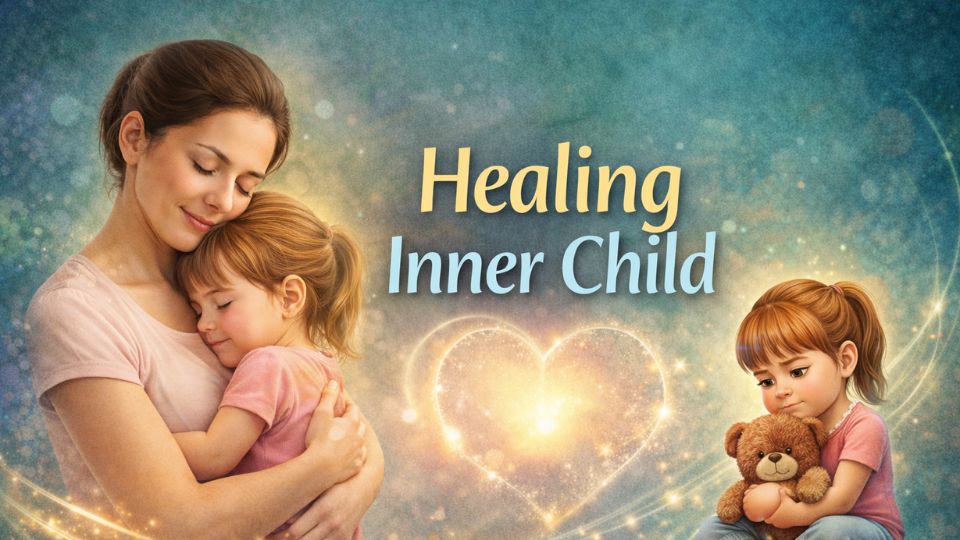
When you hear the phrase ‘the inner child’, you should know that it isn’t just a popular phrase in psychology. It’s the part of your mind that holds onto your earliest memories, your biggest laughs, and unfortunately, your first hurts. In addition to storing joyful memories and experiences from the earliest days of your life, the inner child keeps your fears and first trauma that may affect you much later when they pop up out of nowhere.
By healing the inner child, people are trying to change something in the past; it isn’t possible. However, healing the inner child means finding out the ‘leftovers’ of the traumatic experience which have stayed with you until today and influenced your behavior. Read on to discover how to spot these wounds and start the journey toward feeling whole again.
What Does an Inner Child Wound Mean?
Imagine an emotional “bruise” that has yet to heal because it was not properly treated during childhood. An inner child wound arises when a person grows up feeling unloved, neglected, or obligated to behave perfectly in order to receive any attention.
Children lack an “adult brain” to properly understand emotions, and when faced with frightening or traumatic events, they would simply freeze or block it out. These memories are stored in the subconscious mind like old files. Even if one cannot recall the exact event later in life, they will still experience the same emotional “sting” when confronted with a similar situation.
5 Most Common Indicators of Emotional Wounds
Most of us are unaware that many of the behaviors we consider typical of ourselves are actually attempts by our inner child to protect itself. Here are the five common indicators:
1. Feeling Like You’re “Not Good Enough”
Also known as toxic shame, it is distinct from guilt. Guilt is the emotion that arises after one commits a crime; toxic shame is the persistent sense that one’s existence is inherently flawed. One will continually fret about whether other individuals would love them once they become acquainted with their flaws.
2. Always Trying to Please Everyone
If one finds it exceedingly difficult to refuse, they are likely a people-pleaser. Perhaps they grew up believing that they could only elicit affection from their loved ones if they behaved in helpful ways. They might exhaust themselves as adults while attempting to please everybody else.
3. Being Afraid People Will Leave You
When one feels uneasy when their friends are occupied, or if they cling to their partners to such an extent that it is harmful, they might be afraid of being abandoned. This anxiety over abandonment causes one to endure any type of abuse since being alone seems more dreadful than anything.
4. Needing to Be Perfect All the Time
If one considers themselves a failure for making even a minor error, their inner child may still be attempting to earn “gold stars.” Many high-achievers are actually just kids who were only noticed when they won a trophy or got an A+. If you can’t relax without feeling guilty, your inner child is likely still “performing” for approval.
5. Getting Easily “Triggered” or Overwhelmed
One may lash out at a loved one for the smallest reason and afterwards, question, “Why did I get so angry?” When a past wound is triggered, the individual reacts emotionally rather than rationally since their emotions are still those of a little kid. On the flip side, some people just “numb out” and feel nothing at all because it feels safer than feeling pain.
How Growing Up Without Safety Impacts Our Mental State
It is essential to feel secure as a kid. Safety entails more than merely having shelter and nutrition; it implies that the individual understands their parents and trusts them to protect their sentiments. The following are the psychological implications of a lack of safety:
- Emotional Neglect: If one’s household does not discuss emotions and encourages them to “stop crying,” they will likely have grown up stifling their true sentiments. Adults will often appear to lack emotional intelligence since they have always avoided expressing their emotions. In addition, they tend to have strange bodily pains since they are holding back their tears.
- Psychological Neglect: If one frequently gets reprimanded or teased by their parents, they will probably have developed a harsh inner critic as adults. Individuals who suffer from this neglect will have a tendency to abandon their aspirations before even pursuing them since they are fearful of being laughed at by others.
- Physical Neglect: Failure to get sufficient affection or to feel safe in one’s house will result in a restless feeling as an adult. As a consequence, they may have difficulty maintaining proper nutrition and sleep habits or may consistently feel rushed.
7 Simple Ways to Start Healing
Healing is really just about learning to be your own best parent. You are stepping up to give that younger version of you the love they missed out on. Here are the best seven tips:
1. Reflect Upon Your Childhood
Take a trip down memory lane and imagine oneself at various ages: a toddler, grade school, or teenage years. Question oneself: “What would have helped that youngster back then?” Perhaps one should reassure them that it is acceptable to become enraged or simply sit with them and engage in enjoyable activities. Identifying the “gap” is the initial step.
2. Write a Letter to Your Younger Self
Get a piece of paper and write a heartfelt letter to the younger version of oneself. Tell them, “I’m so sorry you had to go through that, but now I’m here, and I’ll never leave you.” To discover what their wishes and feelings are, one may even attempt to communicate with them via their “other hand.”
3. Be Kind to Yourself
Words carry incredible power. Thus, it is crucial to change one’s perspective and encourage oneself with compassionate messages such as:
“It’s fine to commit errors since it aids in my education.”
“I have the option of declining if I am exhausted.”
“I deserve love regardless of my performance.”
4. Visualize Your Inner Child
Close your eyes and visualize your younger self. Imagine them next to you and ask how they are feeling. Give your inner child a hug and let them know they are loved. Visualizing will help your mind to understand that scary days are gone.
5. Allow Yourself to Play
A wounded child probably missed playing and being a child. Today, choose to spend time doing things simply because they make you happy. Color in coloring books, jump in puddles, laugh at movies, or eat sweets.
6. Learn to Identify Other Voices
The next time you hear your inner critic say “you are a loser,” stop and ask who said this to you? Did you say this? Or was it your parents, teachers, or a bully twenty years ago? Once you identify the source of criticism, it will stop hurting you.
7. Seek Professional Help
These activities can stir many painful memories. However, you shouldn’t be alone with all of this. Speaking to counselors or coaches who understand trauma could provide useful tips on dealing with unpleasant recollections.
Conclusion
Living with an unhealed inner child is like driving a car with an emergency brake on. Sure, you can keep on driving, but it takes a lot of energy and one day, your body simply won’t take it anymore. Healing will release your emergency brake and allow you to enjoy life.
If you decide to overcome your inner child and start living a healthy and happy life, getting proper support is important. If you wish to get professional help to become truly well, reach out to Babita Chaudhary.