Reiki is more than a form of energy healing therapy; it’s a conscious way of life. At the center of Reiki philosophy are five timeless principles first introduced by Reiki founder Mikao Usui. In contrast to many religions and strict belief systems, these principles aren’t based on a particular faith. Their purpose is to guide practitioners to lead peaceful, ethically balanced, grateful lives.
No matter whether you just started learning about Reiki or want to go further on your spiritual path, following those principles can change your daily life. Originally taught by Mikao Usui in 1920s Japan, these principles have evolved across cultures while preserving their core spiritual power. Read on to discover how these ancient Japanese secrets can invite happiness and blessings into your modern life.
The Origins of the Reiki Precepts
The Reiki system was created by the great Japanese Mikao Usui in the early 20th century. Many people think that Reiki is merely a technique of hands-on healing, but it is actually strongly grounded in spiritual development. Usui understood that the healing of your body depends on how good your soul feels. He called the Reiki principles “The secret law to invite happiness and blessings, the spiritual medicine against all illnesses.”
These Reiki precepts draw inspiration from Emperor Meiji’s poetry and Buddhism. Although they may look like strict laws, they are in fact mantras to purify one’s spirit, soul, and mind. The basic concept behind the Reiki principles is very simple: when you heal yourself, you naturally become capable of curing other people.
Why “Just for Today”?
You might have noticed that all of these principles start with the phrase “Just for Today” (Kyodake wa in Japanese). This is an amazing way to develop mindfulness and let go of unnecessary worries.
By embracing these principles “Just for Today,” we simplify our journey toward self-improvement. Instead of feeling overwhelmed, we focus on making small, meaningful changes in our thoughts and behaviors right now.
Understanding of Five Reiki Principles
The Reiki principles Usui developed are very simple at first sight. However, applying them requires some skills. Below are explanations that will help you use the Reiki principles in real life and improve your spirituality.
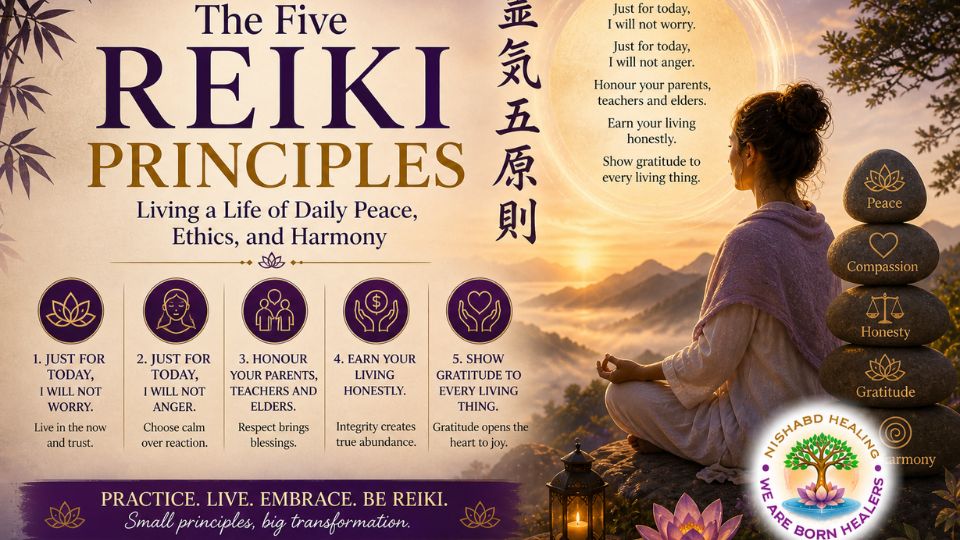
1. Just for Today, I Will Not Anger
Although anger is a natural reaction, holding onto it prevents the flow of universal energies. Following this Reiki precept doesn’t mean not being angry. On the contrary, you should recognize anger, observe it, but never get dominated by this emotion. According to traditional Japanese beliefs, anger disrupts your harmony.
- How to apply: When you feel angry, don’t fight the emotions. Instead, stop, take several deep breaths, and analyze what happens to you. Feel the hotness and observe the negative sensation as long as possible. In this way, you release the energy of anger.
2. Just for Today, I Will Not Worry
Worrying is another way to be distracted from your inner world and the flow of ki in your body. It blocks the positive energies and makes your life less pleasant. Reiki precepts teach that worry weakens your spirit and prevents you from curing.
- How to apply: Learn to trust life and be patient with it. Instead of worrying and being scared, try to relax and meditate. Remember that nothing is as bad as it seems; just give yourself time to cope with any situation.
3. Just for Today, I Will Be Grateful
Living in a high vibration state brings abundance into your life. Focusing on your abundance and appreciating all the little things in your life attracts prosperity in its different forms. Japanese philosophy sees gratitude as the attitude that connects us with the universe via humility.
- How to apply: Take a moment before going to bed to acknowledge the little gifts of your day – a good meal, an act of kindness, or a warm, cozy bed. This shifts your perspective and opens your heart chakra, making you more receptive to healing.
4. Just for Today, I Will Do My Work Honestly
This principle, also translated as “work diligently,” isn’t just about your 9-to-5 job. It refers to your spiritual work and living with integrity. It encourages you to be true to yourself and put sincere effort into your personal growth and healing practice.
- How to apply: Fully commit to whatever task lies before you, whether it is preparing a report or cleaning the kitchen. Diligence and dedication to your actions cultivate self-confidence and bring spiritual alignment to your everyday activities.
5. Just for Today, I Will Be Kind to Every Living Thing
Compassion is the best healer we can ever hope for. This principle promotes respect for all creatures on Earth – people, animals, nature. Seeing everyone’s divinity and acknowledging that we are all connected is the main idea of this principle.
- How to apply: Try to find one moment today in which you can show your compassion towards someone, even if it is only through giving a smile or speaking nicely to yourself.
Why the Reiki Precepts are Universally Applicable
The advantage of these principles is in their versatility and the fact that they belong to no religious tradition. Universal in their applicability, they are open to everyone, irrespective of your cultural or philosophical background.
- Emotional management: The Reiki principles provide guidance in managing our negative emotions, which is essential for achieving our mental well-being.
- Mindfulness: “Just for today” anchor goes hand in hand with today’s mindfulness practices, which have been proven to be effective against stress.
- Holistic health: These precepts acknowledge the connection between mind, body, and soul. Healing the mind means healing the body as well.
- Social harmony: The principles promote kindness and honesty in interpersonal relationships, creating a strong foundation for building a harmonious community.
How to Practice the Principles Daily
Knowing these principles does not mean that you should live according to them. To actually reap benefits from incorporating them into your life, you should make a conscious effort.
- Morning ritual: Read out loud the Reiki principles every morning when you wake up. Say each principle slowly while thinking about its meaning. The practice includes reciting these principles while doing Reiki self-treatment.
- Visual reminders: Print and hang a Reiki principles chart next to your mirror or on your altar to constantly remind you of the message conveyed by the precepts.
- Journaling: Choose one principle per week and meditate about it during the day. For example, you may ask yourself “What am I grateful for today?”
- In-the-moment anchors: You can use the principles as an anchor in difficult moments of your life, such as a stressful conversation. “Just for today, I will not be angry”.
Conclusion
Integrating these principles into your daily practice will lead you to transformation of your personality. These principles encourage us to be present in the moment and be mindful about our choices.
By focusing on “Just for Today,” you take the pressure off and allow yourself the grace to grow one step at a time. Gradually, these small changes accumulate, leading to a more fulfilling and purposeful life.